Clay, Glaze, and the
Art of Firing
A reference for potters and ceramic artists working in Canada — from selecting the right clay body to understanding glaze chemistry and kiln firing techniques.
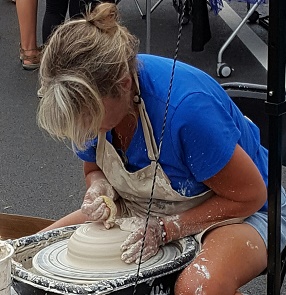
Centering and opening clay on a kick wheel. Photo: Wikimedia Commons / CC.
Articles
Fundamentals of Pottery & Glazing
Three in-depth guides covering the core disciplines of working with clay and ceramic glazes, with context for Canadian studio conditions and material availability.

Choosing the Right Clay Body for Canadian Potters
Earthenware, stoneware, and porcelain respond differently to Canada's firing conditions. A guide to understanding plasticity, shrinkage, and supplier options across provinces.

Understanding Glaze Chemistry: Oxides, Fluxes and Silica
A practical breakdown of the three-part glaze system — silica, alumina, and flux — and how oxide colorants behave at different cone temperatures.

Wood Firing and Anagama Kilns: A Canadian Perspective
Wood firing produces surfaces that gas and electric kilns cannot replicate. An overview of anagama kiln construction, stoking schedules, and ash glaze formation.
Overview
Pottery in Canada
Canada's pottery tradition spans Indigenous ceramic practices dating back thousands of years and a growing contemporary studio scene concentrated in British Columbia, Ontario, Quebec, and Prince Edward Island. The country's climate — with its wide temperature range and varying humidity — directly affects drying rates, studio heating costs, and the behaviour of clay during construction.
Commercial clay suppliers such as Plainsman Clays in Alberta and Tucker's Pottery in Ontario formulate bodies specifically for North American firing conditions, offering a range of stoneware and porcelain blends suited to cone 6 electric and cone 10 gas or wood firing.

Contact
Questions about content, corrections, or editorial inquiries — use the form below.